
Best AI Tools for Bankruptcy Petition Prep: August 2026

You're probably using software that turns a six-hour petition into a four-hour petition by making data entry faster. Glade and the best AI tools automating bankruptcy petition preparation in 2026 turn that same petition into a 30-minute review by removing data entry completely. The difference shows up in what your paralegals actually do: transcribing paystubs versus reviewing extracted data, building creditor matrices versus approving auto-populated schedules. We're comparing the tools that actually change the work, and not merely the speed.
TLDR:
- AI-native petition prep automates data extraction and validation, cutting 6-hour workflows to 30-minute reviews
- Paystub parsing extracts income line items and converts pay-period data to monthly figures using calendar math
- Native PACER eFiling handles district-specific packet assembly and form updates across 6+ federal jurisdictions
- Pre-filing AI validation scans 21 document types against court rules before attorney review
- Glade consolidates intake, means testing, schedules, payments, and eFiling into one workflow with shared data
AI-Powered Petition Preparation vs Legacy Software Approaches
Preparing a bankruptcy petition the traditional way takes two to six weeks. Clients gather paystubs, complete credit counseling, and walk paralegals through asset lists. Legacy form-filling software like Best Case or Jubilee speeds up the typing part, but the underlying work stays manual: chasing documents, transcribing data into schedules, and reconciling client answers with court forms.
AI-native tools rebuild that process. Instead of blank fields for paralegals to populate, AI agents handle collection, extraction, and pre-population automatically, surfacing exceptions for human review only when judgment is needed.
The practical gap looks like this:
- Legacy software turns a six-hour petition into a four-hour petition by speeding data entry.
- AI-native workflows turn a six-hour petition into a 30-minute review by removing data entry entirely.
That architectural difference determines what you can actually scale.
Automated Document Intelligence and Data Extraction
Document collection sits at the heart of petition prep, and it's where firms hemorrhage hours. A client uploads a stack of PDFs. Someone reads each one, classifies it, extracts the numbers, and types them into the right field on the right schedule. Multiply by 50 cases a month and you have a full-time job nobody wants.
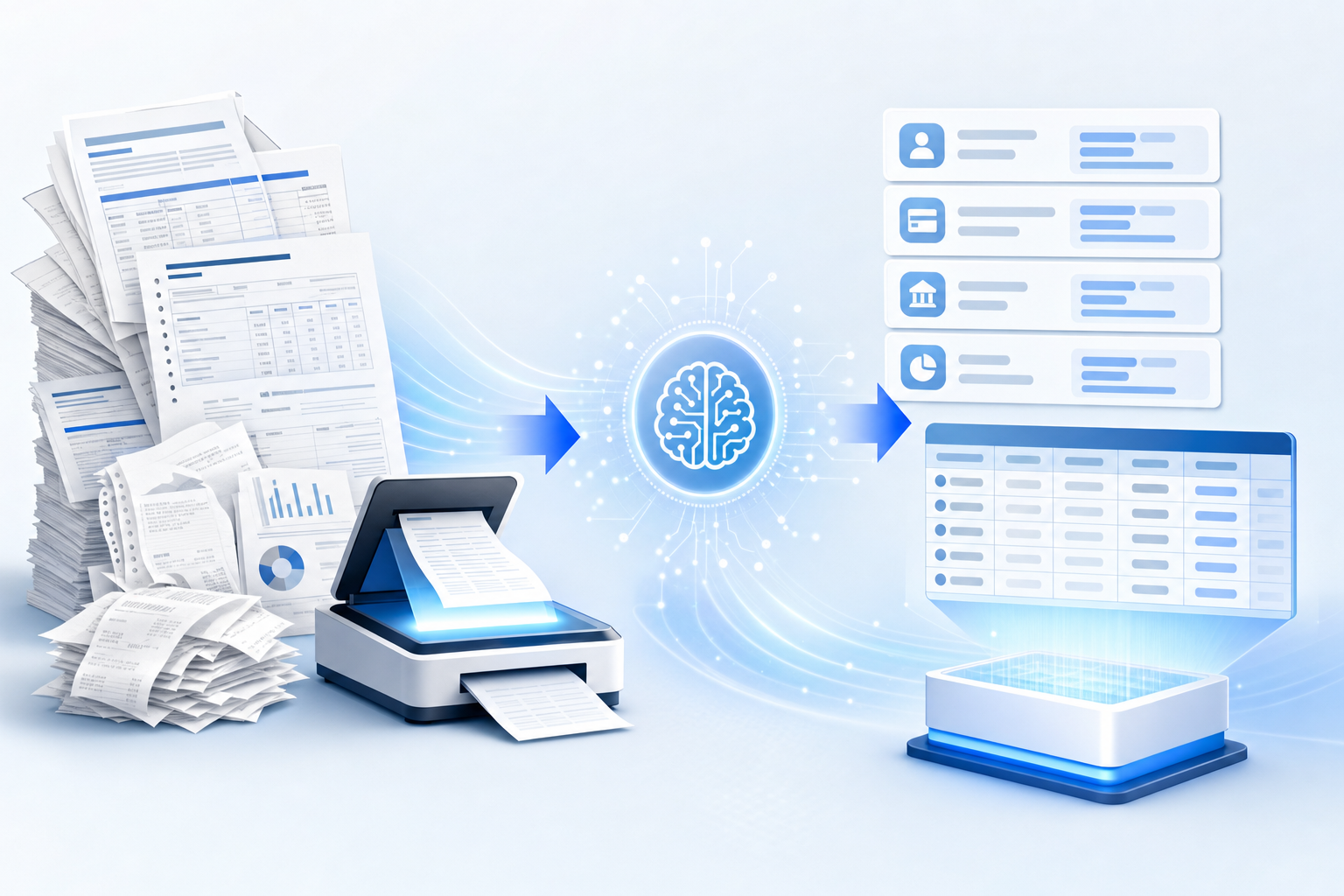
AI document intelligence tools collapse that pipeline. The better systems handle three jobs at upload time:
- Paystub parsing that pulls gross income, tax withholdings, retirement contributions (401k, 403b, HSA), and pretax deductions at the line-item level, then converts pay-period data into monthly figures using actual calendar math.
- Credit report ingestion that auto-populates Schedule D and the creditor matrix without manual transcription.
- Context-aware field generation, where Schedule C brief descriptions auto-fill from property locations or year/make/model data captured elsewhere.
The result: paralegals review extracted data instead of typing it.
Deterministic Means Test Calculation
The means test is math, not judgment. It applies fixed formulas to income data and compares results against statutory thresholds set by DOJ. AI inference is the wrong tool here. Run the same paystub through an LLM twice and you can get two different numbers. Run it through a deterministic calculation engine and you get the same answer every time, with a traceable audit trail.
The strongest petition prep tools split the work accordingly:
- AI handles the messy front end: parsing paystubs, classifying pay frequency, extracting year-to-date figures from inconsistent document formats.
- Rule-based logic handles the back end: applying frequency multipliers, converting to monthly equivalents, comparing against IRS standards, and populating means test forms.
For court filings, this matters. A trustee objection over a miscalculated current monthly income can dismiss a case or trigger a 707(b) motion. Deterministic math removes that risk.
Automated PACER eFiling Integration
A petition prepared but not filed sits in limbo. Most petition prep tools stop at the PDF, leaving attorneys to log into PACER separately, sequence attachments by hand, and assemble district-specific packets before submission. That handoff is where rejections happen: a missing LF 29, a creditor matrix in the wrong order, an outdated form version. Federal court electronic filing requirements vary by district, compounding the complexity.
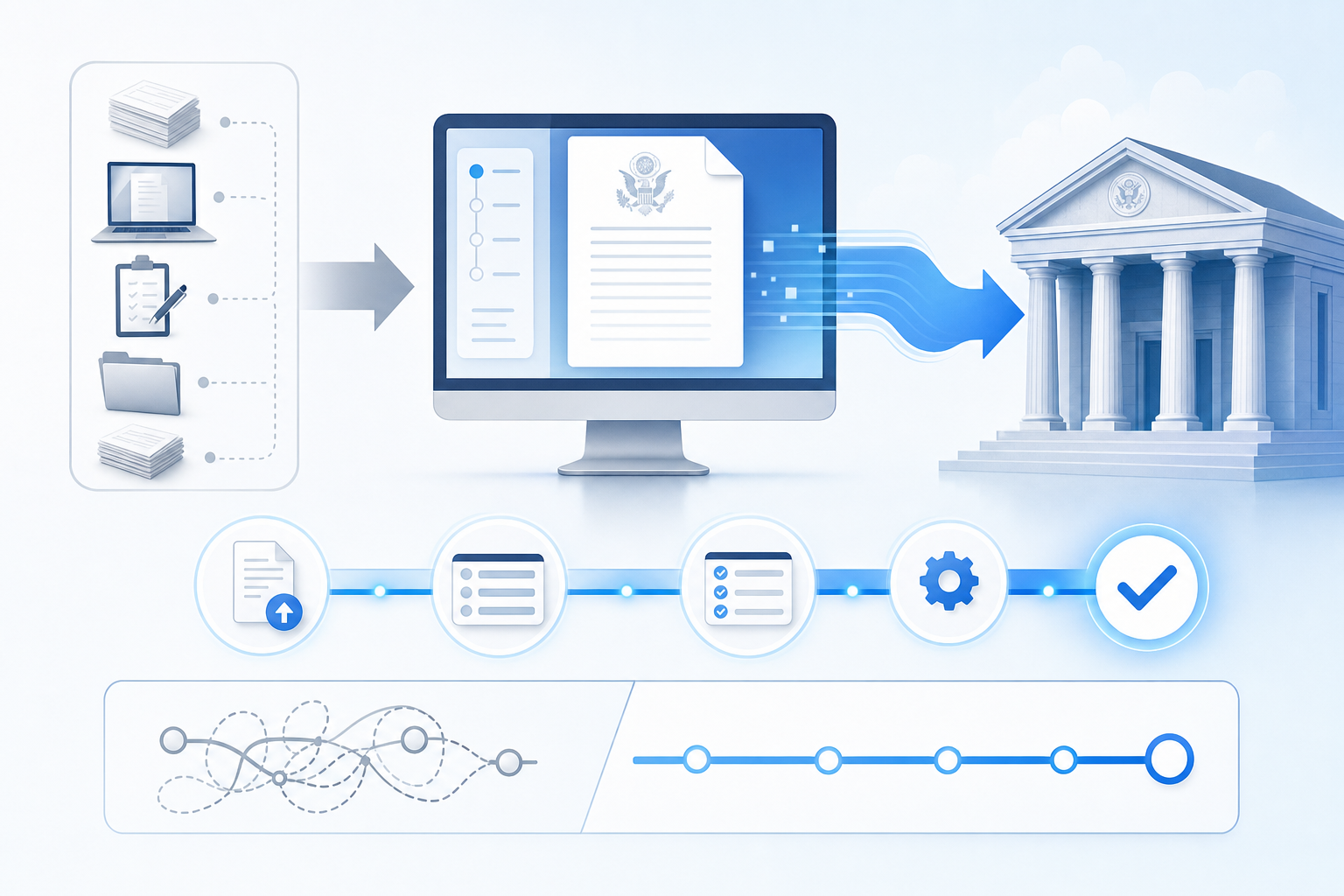
Tools with native ECF integration close the loop. Petitions move from review to court submission inside one interface, with real-time progress tracking and in-flight cancellation if something needs to stop mid-filing.
Capability | Manual PACER | Native ECF Integration |
|---|---|---|
District template assembly | Paralegal builds packet | Auto-merged per jurisdiction |
Document sequencing | Manual ordering | Rule-based ordering |
Form version tracking | Firm responsibility | Auto-updated (e.g., B2030) |
Filing status visibility | Email confirmations | Real-time progress |
District coverage matters. Pennsylvania Western, Florida Southern, Kentucky Western, Mississippi Northern, and California Central each carry distinct local rules that shape packet structure.
Pre-Filing Document Validation and Compliance Review
Court rejections are expensive. A bounced filing means refiling fees, missed deadlines, and explaining to a client why their case stalled over a checkbox. Manual attorney review catches most issues, but reviewers get tired by case 40 of the week.
Best bankruptcy filing software flips the order of operations. Before a human opens the packet, an agent scans every document against district-specific filing rules and flags anything that needs attention. The strongest implementations review 21 PACER document types and assign each one a status: Approved, Needs Review, Evaluating, or Failed. Attorneys can override AI judgments when they disagree.
What this catches automatically:
- Missing signature dates on declarations and disclosures
- Outdated form versions (an outdated B2030 instead of the current court-approved version)
- Sequencing errors in combined PDFs
- Empty required fields buried inside long schedules
Reviewers then spend time on the documents flagged for review, not on green-lit ones.
Workflow Consolidation and Stack Replacement
Petition prep doesn't happen in a vacuum. A firm running excellent petition software alongside separate tools for billing, client communication, document storage, and intake still loses hours to context-switching. The average bankruptcy practice juggles five to seven disconnected systems, and every handoff is a chance for data to drift or disappear.
The question worth asking of any petition tool: what does it absorb, and what does it still leave on your stack? Tools earn consolidation credit when they bundle:
- Native payments for retainers, payment plans, and trust accounting, with QuickBooks sync for firms keeping books elsewhere
- A client portal where debtors upload documents, sign retainers, pay invoices, and message the firm without separate logins
- Case workflows that connect intake responses directly to schedules, so a question answered once populates everywhere it appears
If your team still bounces between five tabs to file one case, you haven't actually changed the work.
Petition Preparation for Bankruptcy Firms Using Glade AI
Glade pulls every capability from the prior sections into one system. Single-entry data propagates across 21+ linked petition fields. AI agents review filing packets against 21 seeded PACER document types before submission. Automated eFiling runs in six federal districts with 7 to 10 minute filing cycles, and native payments through Stripe and Confido handle retainers inside the same workflow.
What sets the workflow apart
- Client intake, credit pulls, means testing, schedules, and SOFA all share one data layer, so a corrected location updates everywhere it appears
- AI agents flag missing signatures, mismatched creditor totals, and venue errors before the packet reaches the clerk
- Trust accounting and fee collection sit alongside case workflows, removing the handoff between billing software and filing software
The outcome: petition prep drops to under 2 hours, without trading court accuracy for speed.
Final Thoughts on AI in Bankruptcy Petition Preparation
AI tools automating bankruptcy petition preparation work when they remove data entry instead of merely speeding it up. Your team stops transcribing paystubs and starts reviewing pre-populated schedules. If you're filing more than 15 cases a month, book a demo to see how petition workflows collapse from hours to minutes. You'll either cut your prep time by 75%, or you'll confirm your current stack is doing what it should.
FAQ
What's the best bankruptcy software for attorneys in 2026?
AI-native petition prep tools like Glade cut preparation time from 8 hours to under 2 hours by auto-extracting data from paystubs and credit reports instead of requiring manual entry. Look for automated document intelligence, deterministic means test calculation, pre-filing validation against court rules, and native PACER eFiling in your practice jurisdictions.
How does AI document extraction work for bankruptcy petitions?
AI parses uploaded paystubs at the line-item level to extract gross income, deductions, tax withholdings, and retirement contributions, then converts pay-period data to monthly figures using calendar math. Credit report ingestion auto-populates Schedule D and creditor matrices without transcription, turning what was hours of data entry into minutes of review.
Can I automate PACER eFiling without court rejections?
Yes, when pre-filing validation runs before submission. AI agents scan every document in the filing packet against district-specific rules, flag missing signatures or outdated form versions, and catch sequencing errors that cause rejections. Native ECF integration then assembles packets by jurisdiction and submits directly to court systems in 7 to 10 minutes.
What's the difference between Best Case and AI-powered petition software?
Best Case speeds typing but leaves document collection, data transcription, and reconciliation manual. AI-powered tools remove data entry by auto-populating schedules from uploaded documents, propagating single entries to 21+ linked fields, and running real-time means test calculations that update instantly when income data changes.
How much does bankruptcy case management software cost for law firms?
Traditional stacks running Best Case, Clio, LawMatics, and LawPay cost $800 to $2,000 per month across disconnected tools. All-in-one systems consolidate intake, petition prep, payments, and eFiling into one platform, reducing monthly software spend while removing the hours lost to context-switching between systems.