
How Bankruptcy Firms Use Bifurcated Retainers to Improve Cash Flow (And How Glade Automates It) (June 2026)

The standard Chapter 7 retainer creates a catch-22. Your client needs bankruptcy relief but can't pay $2,500 upfront. If you file the petition before collecting the full fee, section 727 discharges the unpaid balance along with every other pre-petition debt. Bill after filing and you're billing a debt that no longer exists. Most firms turn the client away. Bifurcated retainer agreements solve this by splitting the work into two separate contracts. The pre-petition piece covers a skeletal filing that triggers the automatic stay, often priced at zero or a nominal amount. The post-petition piece covers schedules, the statement of financial affairs, 341 prep, and discharge representation. Because those fees are earned after the petition date, they sit outside the discharge and can be collected on monthly installments. For firms running 100-plus cases a month, bifurcation turns clients you used to refer to legal aid into a recurring revenue base over four to six months. The execution drag sits in managing two agreements, routing payments correctly between trust and operating accounts, automating installment pulls with retry logic, and keeping Form B2030 disclosure current without adding paralegal hours. Glade automates the full bifurcated workflow with conditional intake logic, line-item payment processing through Confido, and scheduled ACH collection with same-day decline alerts.
TLDR:
- Bifurcated retainers split Chapter 7 fees into pre-petition (often $0) and post-petition work, letting clients pay over 4 to 6 months after filing instead of fronting $1,000 to $3,500 upfront.
- Post-petition fees survive discharge under section 727 because they're earned after filing, but courts require plain-English disclosure, informed consent, and reasonable fees under section 329.
- Utah, Western Pennsylvania, Southern Florida, and Eastern Michigan approve bifurcation under defined conditions; Northern Illinois restricts it, and most districts have no controlling opinion.
- Autopay cadence matching client pay cycles clears more reliably than monthly lump sums, and failed payments need automated retry plus same-day alerts to avoid silent 30-day delinquencies.
- Glade handles both retainer agreements with conditional logic, auto-generates two invoices from one intake decision, routes pre-petition fees to trust and post-petition to operating through Confido, and syncs to QuickBooks without duplicate records.
What Is a Retainer Fee and How Does It Work for Bankruptcy Cases
A retainer fee is the upfront payment a client gives a bankruptcy attorney before work begins. In consumer Chapter 7 and Chapter 13 cases, it typically covers attorney time, the court filing fee, credit counseling enrollment, and credit reports.
Three retainer structures show up most often:
- Advance fee retainer: deposited into the attorney's trust account and drawn down as work is performed. Unearned portions stay refundable.
- Security retainer: held to secure future fees, treated as the client's property until earned under most state rules.
- Flat fee: a fixed price for the full case, earned against milestones in the engagement letter.
Under section 329 of the Bankruptcy Code, every fee a debtor pays in the year before filing must be disclosed to the court, and the judge can review whether the amount is reasonable under USTP enforcement guidelines. The trustee, along with the client, has standing to challenge what the attorney kept.
Average Bankruptcy Attorney Fees in 2026
Attorney fees for a consumer Chapter 7 case in 2026 generally run between $1,000 and $3,500, with no-asset cases at the floor and contested or business-debt cases higher. Chapter 13 fees typically start around $4,000 because the work spans a 36 to 60 month repayment plan.
Case Component | Chapter 7 | Chapter 13 |
|---|---|---|
Attorney fees | $1,000 to $3,500 | $4,000 and up |
Court filing fee | $338 | $313 |
Credit counseling and debtor education | $20 to $50 | $20 to $50 |
Credit report pull | $30 to $50 | $30 to $50 |
Geography drives the spread. Urban districts with heavier trustee scrutiny sit at the top; rural districts cluster near the floor. Prior filings in the lookback window, non-exempt assets, Schedule I business income, and adversary proceedings push fees up. Flat-fee quotes now dominate consumer cases, partly because trustees and judges expect predictable disclosure under section 329.
Why Most Bankruptcy Attorneys Require Payment Upfront
Here's the structural problem. The moment a Chapter 7 petition gets filed, any pre-petition debt the client owes, including the attorney's unpaid fee, becomes an unsecured claim subject to discharge under 11 U.S.C. section 727. Bill the balance after filing and you are billing a debt that no longer legally exists.
That is why Chapter 7 attorneys collect the full fee before the petition hits PACER. Chapter 13 works differently: fees can be paid through the confirmed plan as an administrative expense, so firms take a smaller pre-filing deposit and recover the rest via trustee disbursements over 36 to 60 months using Chapter 13 case management with payment automation.
The squeeze sits on Chapter 7. Clients filing because they cannot pay their debts also cannot write a $2,500 check on day one, so the people who need relief most often cannot afford the lawyer to get it.
What Bifurcated Retainers Are and How They Solve the Affordability Problem
A bifurcated retainer splits the engagement into two contracts. The pre-petition agreement covers a skeletal Chapter 7 filing: emergency petition, creditor matrix, and the documents needed to trigger the automatic stay. Firms often price this piece at $0 or a nominal amount. The post-petition agreement covers schedules, statement of financial affairs, 341 prep, and discharge work. Because those fees are earned after filing, they sit outside the discharge under section 727 and can be collected on installments.
The Utah bankruptcy court approved bifurcation in In re Hazlett when both agreements are disclosed, fees are reasonable, and the client gives informed consent. The U.S. Trustee Program later issued enforcement guidelines so practitioners know what passes review and what draws a section 329 challenge.
How Bifurcated Retainer Workflows Operate in Practice
The mechanics run sequential, not parallel. A typical bifurcated Chapter 7 moves from consultation to discharge in these steps:
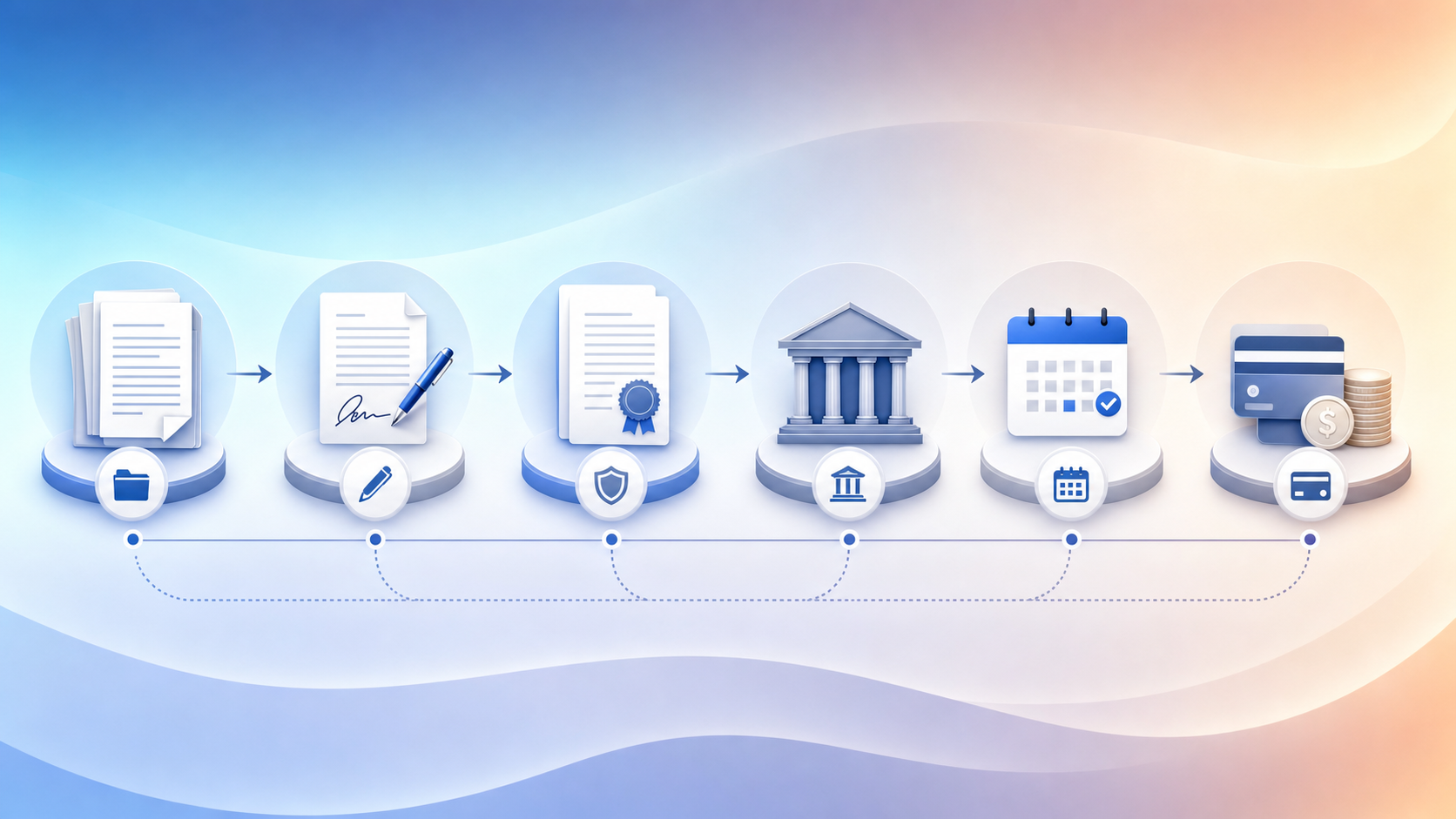
- Intake and option selection. The client picks bifurcation over a traditional flat fee because they cannot front the full retainer.
- Pre-petition agreement signed. Scope is limited to the skeletal filing. Fee is $0 or nominal.
- Skeletal petition filed: voluntary petition, creditor matrix, list of 20 largest creditors, credit counseling certificate, and Form B2030 Disclosure of Compensation. The automatic stay under section 362 halts garnishments and foreclosure sales.
- Post-petition agreement signed. Separate engagement covers Schedules A through J, Statement of Financial Affairs, Form 122A means test, 341 prep, and discharge representation. An updated Form B2030 discloses the post-petition fee. Form B3A authorizes filing fee installments over up to 120 days when the client cannot pay $338 at once.
- Full schedules filed within the 14-day deadline after the skeletal petition.
- 341 meeting, financial management course, and discharge entry.
Bifurcation differs from a standard emergency filing. An emergency filing uses one traditional fee agreement to stop an imminent collection event. Bifurcation treats the skeletal filing as the legal pivot separating pre-petition work from post-petition work so the post-petition fee survives discharge.
The Cash Flow Advantage for High-Volume Bankruptcy Firms
For a firm filing 60 to 150 cases a month, bifurcation is a revenue mechanism. The prospect with $400 instead of $2,500 used to get referred to legal aid. Under bifurcation, that same prospect signs today, with a post-petition installment plan paying out over four to six months.
Three things change at portfolio scale:
- Same-day conversion. The signing decision stops waiting on the client saving the full retainer through payment gates that automate collection.
- Predictable receivables. Run 100 active post-petition plans at $400 a month and the firm has a $40,000 recurring revenue base independent of new intake.
- Lower default risk. Post-petition fees survive discharge, the section 362 stay shields the engagement from collection actions against the client, and missed payments fall under a fee agreement the bankruptcy court has already reviewed.
Compliance Requirements and Court Approval Considerations
Courts approving bifurcation apply a consistent test: informed client consent, plain-English disclosure of both agreements, reasonable fees under section 329, and written acknowledgment that the client may hire the same attorney, retain different counsel, or proceed pro se after the skeletal filing.
What draws disgorgement:
- Boilerplate consent buried in adhesion contracts.
- Pre-petition fees disguised as post-petition work to dodge section 727.
- Abandoned duties (schedules, 341 attendance) when payments stop. Those duties hold regardless of installment status.
- Undisclosed fee-sharing with payment processors. Form B2030 must name the processor and percentage retained.
Jurisdictions split. Utah, Southern Florida, and Eastern Michigan have published opinions approving bifurcation under defined conditions. Parts of the Northern District of Illinois have rejected it or restricted factoring arrangements. Check your district's standing order before rolling out a program.
States and Districts Where Bifurcated Retainers Are Approved
Bifurcation lives or dies on local rules. Treat the map as three buckets:
- Approved with conditions: Utah (In re Hazlett), Western Pennsylvania, parts of the Southern District of Florida, and Eastern Michigan have written opinions or standing orders accepting bifurcated structures when disclosure, consent, and fee reasonableness tests are met.
- Restricted or hostile: parts of the Northern District of Illinois have curtailed bifurcation, particularly arrangements involving third-party factoring of post-petition receivables.
- Undecided: most of the 94 federal districts have no controlling opinion, leaving practitioners reliant on general section 329 reasonableness review.
The American Bankruptcy Institute's Commission on Consumer Bankruptcy has recommended excepting Chapter 7 attorney fees from discharge, which would make bifurcation unnecessary. Until Congress acts, pull your district's standing order and the local trustee's guidance before drafting either agreement.
Payment Collection Mechanics for Post-Petition Installments
Post-petition collection runs on autopay, not invoicing. Capture an ACH authorization or card on file at engagement signing, schedule installments against the post-petition fee total, and let the processor pull on cadence using case management systems with native payment processing.
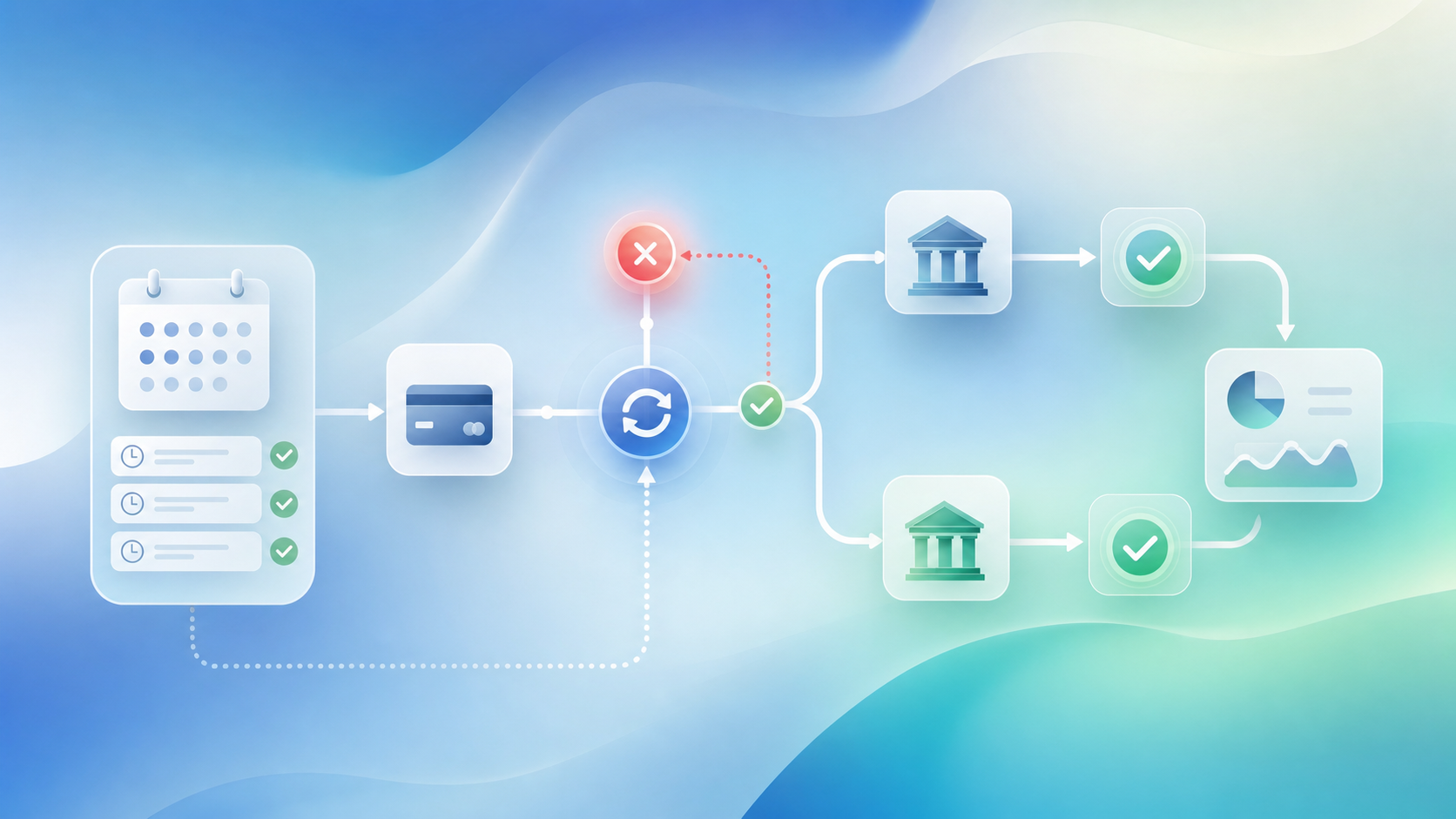
A few mechanics matter:
- Cadence matches the client's pay cycle. Weekly or biweekly debits clear more reliably than monthly lump sums.
- Failed payments need automated retry plus a same-day staff alert. A silent decline becomes a 30-day delinquency before anyone notices.
- Reconciliation ties each debit to the post-petition invoice. Section 329 audits require line-item traceability.
- Trust vs. operating routing depends on your state bar. Earned-on-receipt fees flow to operating; security retainers stay in IOLTA until earned.
Third-party processors like BK Billing or Fresh Start Funding factor the post-petition receivable: the firm gets paid upfront, the processor collects from the client. Form B2030 must disclose the processor's name and the percentage retained. Undisclosed factoring is the fastest path to a disgorgement order.
How Glade Automates the Full Bifurcated Retainer Workflow
Here is how we built it. One intake workflow handles both retainer agreements with conditional logic that auto-skips the unused contract once the client picks bifurcation or a traditional flat fee. Two invoices generate from that single decision: a pre-petition invoice with a configurable down payment (often $0) and a post-petition invoice scheduled across installments through automated legal invoice management.
The pieces that remove paralegal hours:
- Automated installment collection with retry logic on failed ACH or card pulls, plus same-day staff alerts on declines powered by Glade's Finance Agent.
- Line-item routing through Confido. Pre-petition fees land in trust; post-petition fees flow to operating, no manual journal entries.
- QuickBooks sync without duplicate records managed by Glade's AI Finance Agent.
- Form B2030 fields populate from the intake data.
One firm runs $0 initial with $220 per month over 10 months across 30 to 60 bifurcation cases monthly using bankruptcy software that replaces Best Case.
FAQ
What is a retainer fee for a lawyer and how does it work for bankruptcy cases?
A retainer fee is the upfront payment you give a bankruptcy attorney before work begins, typically deposited into a trust account and drawn down as services are performed. In Chapter 7 cases, the fee must be collected before filing because any unpaid attorney fees become dischargeable debt the moment the petition hits PACER, meaning you legally can't collect them after filing.
Can you get a retainer fee back if nothing was done?
Yes, if the retainer is structured as an advance fee or security retainer and the attorney hasn't earned the funds through completed work. Unearned portions of advance fee retainers remain the client's property and must be returned from the trust account. However, if the retainer is a flat fee that was earned on receipt per the engagement letter, refundability depends on state bar rules and what work, if any, the attorney performed.
Bifurcated retainer vs traditional flat fee for Chapter 7?
A bifurcated retainer splits the engagement into pre-petition (skeletal filing) and post-petition (full schedules and discharge work) agreements, letting clients pay the bulk of the fee on installments after filing because those fees survive discharge. A traditional flat fee requires the full payment upfront before any petition is filed, which blocks access for clients who can't front $2,500 but could pay $400 per month over six months after the automatic stay protects them.
How does a retainer fee work for an attorney using bifurcated agreements?
The attorney signs two separate contracts: the pre-petition agreement covers the bare-minimum skeletal filing (often priced at $0 or nominal) to trigger the automatic stay, and the post-petition agreement covers schedules, means test, 341 prep, and discharge representation. The post-petition fee is billed on installments because it's earned after filing, sits outside section 727 discharge, and can be collected over four to six months via automated ACH or card-on-file payments.
Average retainer fee for a Chapter 7 bankruptcy lawyer in 2026?
Chapter 7 attorney fees in 2026 typically run $1,000 to $3,500, with no-asset cases at the floor and contested or business-debt cases higher. Geography drives the spread; urban districts with heavier trustee scrutiny sit at the top, rural districts cluster near the floor, and prior filings, non-exempt assets, or adversary proceedings push fees up. Add $338 for the court filing fee, $20 to $50 for credit counseling and debtor education, and $30 to $50 for credit reports.
Final Thoughts on Retainer Fee Models for Bankruptcy Cases
Your retainer structure determines which clients can afford representation and how predictable your cash flow becomes at scale. Bifurcation trades the single upfront check for recurring post-petition revenue spread across installments, pulling in prospects who used to get referred out. Request a demo to see how Glade automates both contracts, syncs invoices to QuickBooks, and keeps section 329 disclosure current without your team touching it.