
Best Bankruptcy Case Management Software: All-In-One Workflows for June 2026

Everyone running a consumer bankruptcy practice above 80 cases monthly knows the petition-prep cycle. Paralegal pulls the credit report, keys it into Schedules D, E, and F, builds the creditor matrix, calculates exemptions, runs the means test, and prays the filing date matches every signature page. Eight hours later, the petition goes out. Then the court rejects it because a local form changed last week and your software didn't know. Bankruptcy case management tools in 2024 and 2025 have improved, but most still treat billing, accounting, and case workflows as separate problems. All-in-one software built for bankruptcy law firms treats them as one system, so the petition builds itself and the workflow knows when to stop until payment clears.
TLDR:
- Petition prep routinely takes 8+ hours per case; automated credit-report ingestion and paystub parsing cut that to roughly 2 hours.
- Payment gates lock workflow progression until milestones clear, turning billing into a control mechanism for high-volume firms.
- Semantic PACER classification routes 341 notices, deficiency alerts, and hearing dates to the right matter across all 94 districts without keyword breakage.
- Event-driven follow-ups fire automatically on document uploads and payment receipts, ending manual client chasing.
- Glade handles automated e-filing in ten districts, semantic notice classification, and native Abacus/Sage compliance integration inside one workflow.
Why Bankruptcy Case Management Requires Specialized Software
Consumer bankruptcy practices running 80+ cases monthly look nothing like personal injury or family law shops. The work is petition-shaped: schedules, means tests, exemption math, credit-report transcription, and filings rejected when a signature date drifts off the filing date. Bankruptcy filings rose 16.2 percent in the twelve-month period ending September 2024, compounding capacity pressure on firms still running manual workflows.
Three pressures define the category:
- Petition preparation as the bottleneck. Paralegals routinely spend 8+ hours assembling a single petition, keying credit reports line by line into Schedules D, E, and F.
- Filing complexity across 94 federal bankruptcy districts, each with local forms and signature conventions that change without warning.
- Payment plan administration. Bifurcated retainers, milestone gates, and AR cycles generalist billing modules were never built to handle.
Bankruptcy-specific software absorbs that configuration work natively.
Core Features Every Bankruptcy Case Management System Must Include
Use this as your filtration checklist when reviewing bankruptcy software vendors. If a tool misses any of these, it's general legal software wearing a bankruptcy label.
- Deterministic means test engine with statutory threshold comparison and a traceable audit trail, syncing to Schedule I and Form 122.
- Credit report ingestion that auto-populates Schedules D, E, and F plus the creditor matrix from a tri-merge pull.
- Exemption calculator with jurisdiction-specific homestead logic and lien-adjusted equity math feeding Schedule C.
- Single-entry data propagation, so income changes flow to Schedule I, Form 122, and downstream calculations.
- Live Chapter 7 to Chapter 13 switching inside the petition flow, without re-keying intake data.
- Signature and filing-date generation grouped by signer role, preventing date-mismatch rejection.
- Multi-district template configuration honoring local forms (OHSB 1015-2, FLMB 122A-1Supp, SCB 103B).
- A required-field filing gate that blocks submission until credit counseling completion dates and other mandatory inputs are present.
Petition Preparation and Document Intelligence
Document intelligence collapses the assembly job. A tri-merge credit pull flows straight in: secured debts land on Schedule D, priority and unsecured on E and F, the creditor matrix builds itself, and prior bankruptcies, foreclosures, and judgments populate the Statement of Financial Affairs.
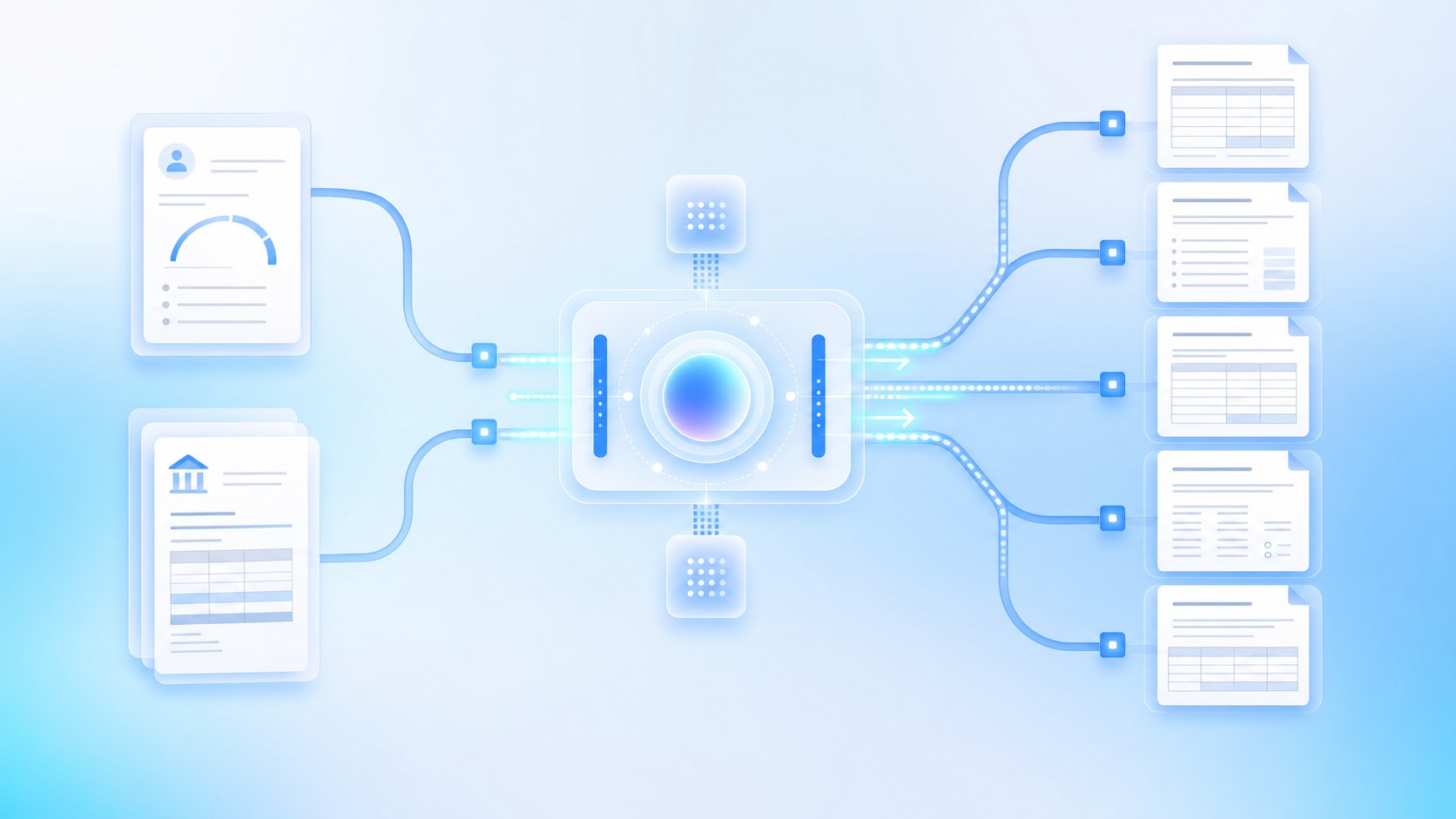
Paystub parsing extracts gross, taxes, retirement, and withholdings line-item, converted using real calendar math instead of flat averaging. Income Organizer offers six-month All Paystubs averaging or Single-Paystub YTD modes, feeding Schedule I and Form 122 directly.
Pre-filing validation runs every document against district-specific rules across 21 seeded PACER document types, returning Approved, Needs Review, In Review, or Failed statuses with attorney override before anything touches PACER.
PACER Integration and Court Filing Automation
Two integration jobs sit on either side of the filing event: getting petitions out, and getting court responses back in.
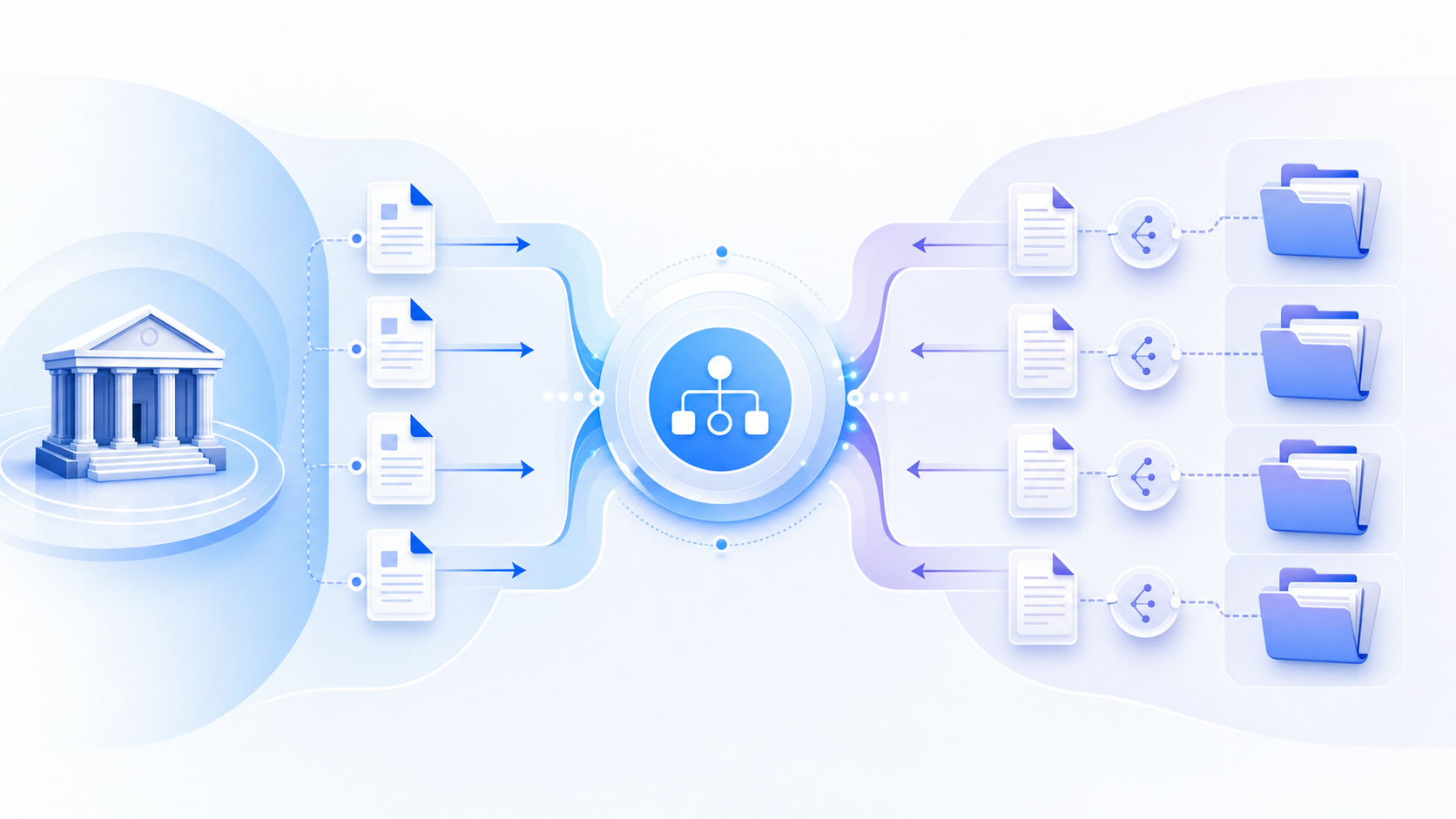
Automated e-filing is live in ten federal bankruptcy districts (FLMB, FLNB, FLSB, IDB, SCB, WAWB, PAWB, OHSB, NCEB, AREB). Submission typically completes in 7 to 10 minutes, running asynchronously so the attorney isn't parked at the keyboard. The engine handles interstitial warnings and confirmation dialogs courts inject mid-flow.
On the inbound side, a managed PACER events email ingests notices once, classifies them semantically across all 94 federal districts, and attaches them to the right matter. That single ingestion also kills the per-page access fee multiplier; PACER charges $0.10 per page for each document retrieval, capped at $3.00 per document, and those costs compound fast when every paralegal pulls the same notice independently.
What the classification layer does:
- Identifies 341 Meetings, Motions to Dismiss, Deficiency Notices, 521 Compliance, Orders Discharging Debtor, Motions for Relief from Stay, Reports of No Distribution, Proofs of Claim, and Hearing notices semantically, not by keyword.
- Extracts the conducting trustee on 341 notices instead of defaulting to the first name listed.
- Populates calendars with hearing dates, times, courtroom, Zoom ID/passcode, dial-in, and trustee contact, normalized by timezone.
- Re-associates notices when a court transfers a case and assigns a new number.
Keyword parsers break every time a district updates its template. Semantic classification doesn't.
Billing and Payment Plan Management for Consumer Bankruptcy
Consumer bankruptcy clients can't pay upfront. That reality shapes every billing decision in a high-volume practice, and generalist invoicing modules weren't built for it.
What the billing layer needs to do:
- Split fees into pre-filing and post-filing buckets for bifurcated retainers, with separate breakdowns for filing fees and attorney fees, plus Schedule 2030 generation.
- Hold workflow progression behind payment gates set as fixed dollar thresholds or percentages, assignable to specific contacts on joint cases.
- Run native payments with plan schedules tracking original versus deferred dates, so AR aging reflects what the client owes today.
- Surface hourly billing alongside flat-fee and plan models, with itemized cost tracking for postage, filing fees, and copies.
Payment gates do the real work at volume. Petition prep doesn't advance, signature requests don't fire, and filing prep stays locked until the milestone clears. Billing becomes a workflow control mechanism, so one admin can support a doubled caseload without renegotiating staffing.
Client Communication and Workflow Automation
The manual follow-up queue is where paralegal hours disappear at volume. An event-driven workflow engine flips that load: triggers wait on real case events (questionnaire submitted, document uploaded, payment received, 341 notice ingested), and actions fire automatically downstream.
What that looks like in practice:
- Document request dispatch tied to workflow steps, with reminders cycling until the upload arrives, so paralegals stop typing "did you upload that yet" messages by hand.
- Status update triggers that send a branded email or SMS the moment a case crosses a lifecycle gate, changing how responsive clients perceive the firm to be without a paralegal touching the keyboard.
- Client portal access for self-serve document upload, questionnaire completion, and status visibility, cutting inbound "where are we" call volume.
- TCPA-compliant SMS restricted to 8 AM to 9 PM local time, with broadcast and opt-in switches managed as firm-wide compliance controls.
Follow-ups also de-conflict against scheduled appointments. If a client has a meeting on the calendar tomorrow, the reminder silences itself instead of stacking a duplicate touchpoint.
Pre-Filing Compliance Lifecycle Management
Credit counseling and debtor education sit in front of every consumer filing, and historically that coordination lived outside the case system. Glade pulls the lifecycle inside through native Abacus and Sage integration.
What runs automatically:
- Enrollment fires after payment confirmation, with forms pre-filled from case data (name, mailing location, SSN, DOB) and filing district resolved via US Census Geocoding.
- Joint filings track spouse certificates separately.
- Certificates arrive via webhook and attach to the matter without a paralegal logging into a third-party portal.
- 180-day expiration alerts surface before a certificate lapses and blocks the filing gate.
- Workflow progression advances on certificate receipt, unlocking the next petition step.
Reporting and Practice Intelligence
At 100+ cases per month, gut-feel staffing decisions stop working. Reporting becomes the system of record for who's doing what at what rate.
- Paralegal Report surfaces per-person filing rate plus cases-in-prep, dropped, paused, and archived counts, turning hiring and performance reviews into a numbers conversation.
- Task Velocity Analytics drills to workflow-step granularity, flagging where the team is slow or reopening work instead of stopping at case-level timelines.
- Conversion Metrics track same-day, monthly, and quarterly close rates with a 12-month conversion waterfall and AR velocity.
- Event-date filters query workflows by retainers signed, invoices paid, or document requests completed inside a window for revenue-timing analysis tied to transaction dates.
Implementation Timeline and Migration Considerations
Switching cost is the real adoption question, and most firms have been burned by vendors quoting weeks but delivering months. Setup runs in days, with parallel operation supported during cutover so active cases never go dark.
Migration paths are documented:
Source System | Migration Mechanic |
|---|---|
Best Case (Stretto) | CSV import with email/name dedupe and merge logic |
Jubilee | Documented import preserving creditor and case data |
Google Sheets trackers | Direct CSV ingestion with parallel-operation overlap |
Your case volume determines the cutover shape. Smaller firms can run both systems; firms above 150 need a hard-cutover plan because two live systems compound overhead too fast.
How Glade AI Delivers End-to-End Bankruptcy Workflows
Glade pulls everything above into one operating system. The 8-hour petition-prep cycle collapses to roughly 2 hours through multi-agent document intelligence, deterministic means-test math, and single-entry propagation across 21+ linked fields. E-filing runs asynchronously in supported districts; PACER notices route themselves into the right matter; Abacus and Sage handle pre-filing compliance inside the workflow.
The follow-up engine ends manual client chasing. The Paralegal Report turns staffing into a numbers conversation instead of gut feel.
Four of the country's top ten bankruptcy firms by filing volume already run on Glade. Setup completes in days, not months.
Final Thoughts on Bankruptcy-Specific Case Management
Your case volume determines whether general software is friction or a wall. When you're filing 80+ petitions monthly, the hours paralegals lose keying credit reports and chasing signatures compound into capacity constraints no amount of hiring solves. Book a demo to see how petition automation, native e-filing, and event-driven client communication change what one paralegal can carry. The software should scale your team, not your headcount.
FAQ
What are the best legal practice management software options for bankruptcy law firms?
Bankruptcy-specific systems like Glade handle petition assembly, PACER e-filing, payment plan administration, and court-notice classification in one workflow. Generalist platforms like Clio and Filevine work well for mixed-practice firms but require five to seven add-on tools to cover credit-report ingestion, means-test math, and multi-district filing rules that bankruptcy practices run on daily.
What are the best legal billing software options for law firms that specialize in bankruptcy cases?
Billing software built for bankruptcy needs to split fees into pre-filing and post-filing buckets for bifurcated retainers, hold workflow progression behind payment gates, and run native payment plans tracking original versus deferred dates. Generalist billing modules miss the payment-plan administration and milestone-gate logic consumer bankruptcy practices depend on.
How long does implementation take for bankruptcy case management software?
Setup completes in days for bankruptcy-specific systems purpose-built for high-volume practices, compared to the months-long configuration generalist platforms require. Migration paths support parallel operation during cutover so active cases never go dark.
What's the main difference between bankruptcy petition software and full case management?
Petition software handles form assembly and filing but stops there; firms still run five to seven disconnected tools for intake, payments, client communication, and court-notice tracking. A full case management system takes cases from intake through filing to post-filing notice automation in one unified system.
When should I switch from my current bankruptcy case management stack?
If your paralegals are spending multiple hours per petition transcribing credit reports line by line, or you're maintaining a spreadsheet master tracker because your tools don't talk to each other, or court notices arrive in shared inboxes without case-level routing, those are system-failure signals that specialized automation resolves at the foundation.