
722 Bankruptcy Redemption for Attorneys (July 2026)

It's two weeks before the 341 meeting and your client mentions the car payment is killing them, the loan balance is $16,000, and the vehicle books at $8,500. Reaffirmation means signing them back into the full underwater contract at the original rate with post-discharge liability intact, and surrender leaves them without transportation to work. What most Chapter 7 firms miss is that Section 722 redemption lets the debtor settle the lien at replacement value in one payment, discharge the deficiency, and walk away with clean title once a redemption lender funds the lump sum. Filing the motion adds $600 to $800 in attorney fees per qualifying case, the work fits inside your existing petition workflow, and the revenue sits in cases you're already handling.
This post breaks down what is 722 redemption as a statutory right, the 722 redemption requirements that gate eligibility, how the 722 redemption process runs from intake through funding, what 722 redemption loans cost when clients can't write the check themselves, where to find 722 redemption lenders and 722 redemption companies that underwrite post-discharge, what 722 redemption interest rate ranges redemption loan lenders quote compared to reaffirmation, how does 722 redemption work compared to keeping the original loan or handing the keys back, what the 722 redemption motion must include under Rule 6008, what 722 redemption down payment requirements look like across lenders, where 722 redemption dealerships and 722 redemption cars for sale enter the workflow when a client needs replacement inventory, what 722 redemption reviews and 722 redemption reviews Reddit threads reveal about lender speed and approval rates, how 722 redemption funding reviews compare across providers like 722 Redemption Funding Inc, what 722 redemption Reddit discussions say about rate spreads and underwriting criteria, whether 722 redemption program reviews from other firms show consistent borrower outcomes, what redemption loans auto financing requires for income verification after discharge, how to locate 722 redemption dealerships near me when inventory matters, what 722 redemption inventory and 722 redemption photos support during the valuation hearing, what is a 722 redemption compared to the 722 replacement program label some lenders use, whether US bank 722 redemption programs exist or if credit unions dominate, how redemption 722 mechanics vary by district, where to find a 722 redemption phone number for client pre-approval, what 722 redemption loan reviews reveal about funding speed, what 722 redemption funding Reddit commentary shows about lender reliability, what 722 redemption program reviews say about client satisfaction, what 722 redemption funding inc complaints appear in consumer forums, how 722 redemption car dealers structure inventory for filers, and how firms screen for redemption candidates at intake without extending paralegal hours.
TLDR:
- 722 redemption lets your Chapter 7 client pay a car's $9,000 market value instead of the $18,000 loan balance, discharging the deficiency.
- Redemption makes sense when the loan balance runs 40 to 50 percent above replacement value and post-discharge income supports the payment.
- Lenders charge 16 to 27 percent APR, but settling at half the original principal often beats reaffirmation.
- Filing the redemption motion earns $600 to $800 per case, and lenders roll the fee into the loan principal.
- Glade captures vehicle details once at intake, then auto-populates Schedules A/B, D, and the redemption motion without re-keying.
What Is 722 Redemption in Chapter 7 Bankruptcy?
Section 722 of the U.S. Bankruptcy Code lets a Chapter 7 debtor keep physical personal property by paying the secured creditor a lump sum equal to the property's current fair market value, not the remaining loan balance. If a client owes $18,000 on a car worth $9,000, redemption settles at replacement value instead of the full balance, settling the lien for $9,000 and discharging the rest as unsecured debt.
The statute applies only to physical personal property (usually vehicles), only for dischargeable consumer debts, and only when the property is claimed as exempt or abandoned by the trustee.
Three exit paths exist for a secured vehicle in Chapter 7:
- Surrender: hand the car back, discharge the deficiency.
- Reaffirmation: keep the original contract intact, full balance, original rate, full personal liability post-discharge.
- Redemption under 722: settle the lien at present value in one payment, which is why most clients need a redemption lender to fund the lump sum.
How 722 Redemption Works: The Step by Step Process
The mechanics run on a fixed sequence, and skipping a step usually means refiling.
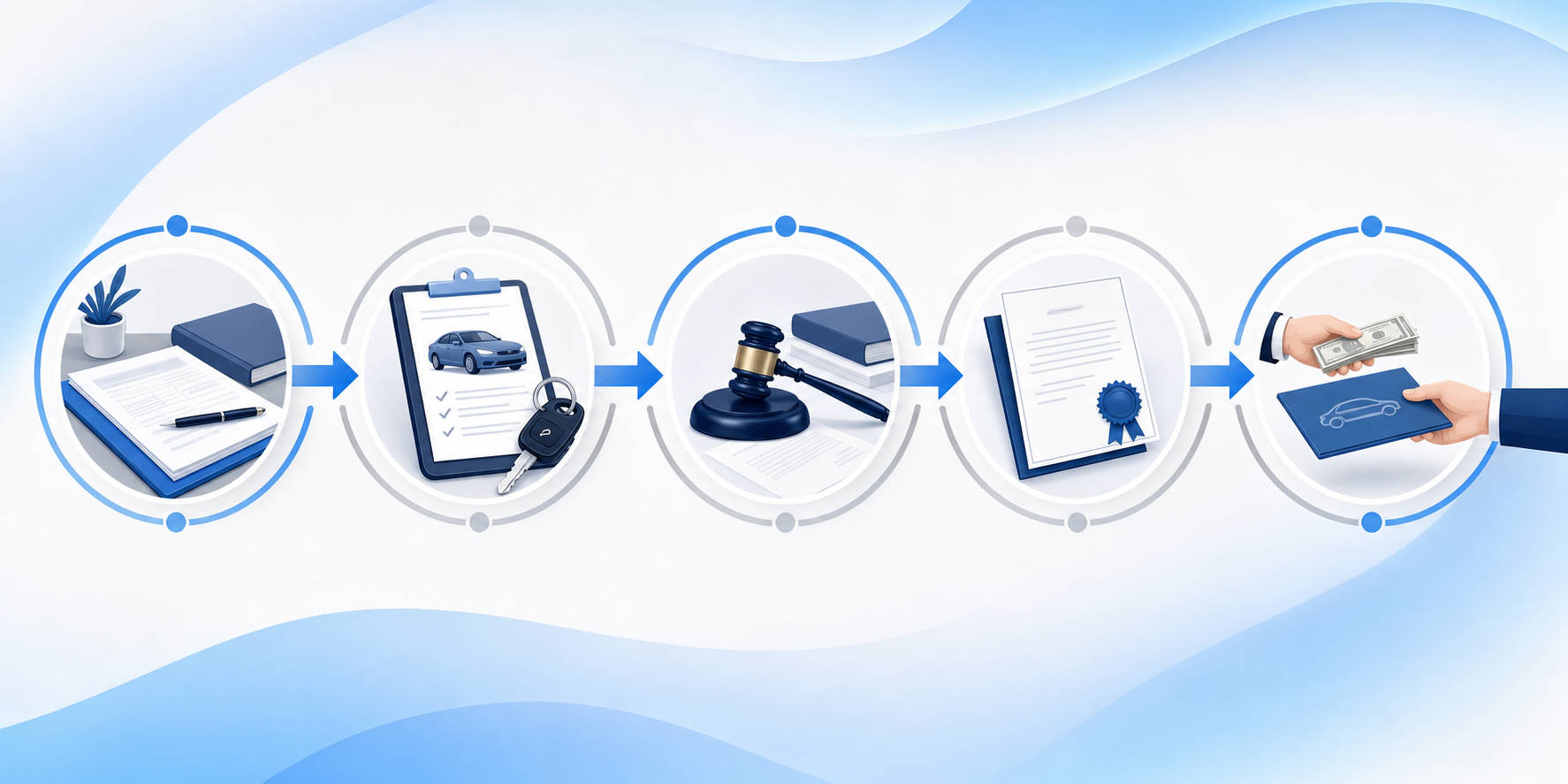
- Apply for redemption financing. The lender underwrites against post-discharge income, since the redemption order is the credit event.
- Pull a written valuation. Pair Kelley Blue Book or NADA retail figures with photos and mileage to support replacement value at hearing.
- File the motion to redeem under Bankruptcy Rule 6008, identifying the creditor, collateral, proposed amount, and valuation basis using bankruptcy filing software that automates motion preparation.
- Serve the secured creditor and trustee. Many districts run a 21-day objection window; without an objection, the motion proceeds uncontested.
- Receive the court order. The debtor pays the lump sum, the lender perfects its lien, and the deficiency discharges with the case.
722 Redemption Requirements and Eligibility Criteria
Four statutory gates determine whether a client qualifies. Miss one and the motion fails on the papers.
- Physical personal property only. Vehicles, appliances, furniture, and tools count. Real estate, intangible assets, and IP do not.
- Primary use is personal, family, or household. A truck driven mostly for a sole proprietorship fails the consumer-use test, even if the loan sits in the debtor's name.
- Dischargeable consumer debt. Tax liens, domestic support obligations, and non-dischargeable purchase money debt are out of bounds.
- Property exempt or abandoned. The equity interest must be claimed exempt on Schedule C, or the trustee must abandon the asset.
- Lump sum payment. Installment redemption is not authorized under 722.
Co-signed loans add a wrinkle: redemption discharges the debtor's personal liability, but the co-signer stays on the original contract unless they file separately.
Vehicle Valuation Standards: Replacement Value vs. Liquidation Value
Before BAPCPA, courts treated liquidation value (wholesale auction net of repossession costs) as the redemption ceiling, keeping payoffs low. The 2005 reform rewrote the math. Under 11 U.S.C. 506(a)(2), personal property securing consumer debt is valued at replacement cost: the price a retail merchant would charge for property of that kind, accounting for age and condition. For a used vehicle, that means retail book value at the petition date, pulling data from multiple valuation sources.
Building a defensible record usually includes:
- A retail valuation from Kelley Blue Book, NADA, or Edmunds, run with accurate mileage and trim.
- Dated photos of the exterior, interior, odometer, and visible damage.
- A mechanic's statement or repair estimates for known defects that reduce replacement value line by line.
- An adjustment narrative tied to 506(a)(2): condition, age, and the absence of warranty or reconditioning a retail dealer would add.
To see how this works in practice: a 2022 Honda Civic with 45,000 miles pulls a retail NADA value of $18,500. Visible door damage and a cracked interior trim piece support a $1,200 condition deduction, bringing the 506(a)(2) replacement value to $17,300. That figure, backed by dated photos and a written repair estimate, is what goes into the motion and what the attorney argues at the valuation hearing.
If the creditor counters with its own appraisal, the judge sets the number at the valuation hearing. Documentation determines how close that number lands to the debtor's filing.
722 Redemption Financing: How Redemption Loans Work
Almost no Chapter 7 debtor has the cash to write a single check for replacement value. That gap is why specialized lenders like 722 Redemption Funding and select credit unions underwrite redemption loans against post-discharge income tracked through bankruptcy software that monitors case milestones.

Rates run high. Redemption lenders typically quote between 16 and 27 percent APR because the lender is funding a borrower whose credit event is days old. Terms stretch 36 to 60 months, with no down payment on most approvals.
The math still tends to favor the client across three axes:
- Principal reduction: redemption settles the lien at replacement value, often half the original payoff or less.
- Total interest paid: a higher APR on a smaller balance over a shorter term frequently beats the original contract.
- Monthly payment: usually lower than the reaffirmation figure, even at the higher rate.
When the loan was deeply underwater, redemption financing pencils out. When the balance sits near fair market value, the rate spread erases the benefit, and reaffirmation or surrender becomes the better call.
Redemption vs. Reaffirmation: Comparing Your Chapter 7 Vehicle Options
Reaffirmation locks the client back into the original contract: same balance, same rate, same personal liability after discharge. Default later and the lender can sue on the deficiency. Redemption settles at present value, kills the deficiency, and moves post-discharge liability to the new redemption loan only, with modern systems offering automated redemption workflows that older platforms lack. Reaffirmation agreements restore creditor lawsuit rights even after the bankruptcy discharge, which is why the reaffirmed debt survives as a fully enforceable obligation.
Dimension | Reaffirmation | 722 Redemption |
|---|---|---|
Payoff amount | Full remaining balance | Replacement value at petition date |
Interest rate | Original contract rate | Typically 16 to 27 percent APR |
Personal liability | Survives discharge in full | Limited to new redemption loan |
Best when | Loan near vehicle value, low rate | Loan materially underwater |
Court involvement | Reaffirmation agreement and hearing | Rule 6008 motion, valuation order |
Counsel toward reaffirmation when the balance-to-value spread is thin and the contract rate beats current redemption financing. Counsel toward redemption when the equity gap is wide enough that wiping the deficiency outweighs the higher APR on the smaller principal.
When 722 Redemption Makes Financial Sense for Clients
Recommend redemption when four conditions stack on the same client:
- Equity gap is wide. The loan balance runs at least 40 to 50 percent above replacement value, so the discharged deficiency outweighs the financing rate spread.
- The vehicle holds up. Mechanically sound, low projected repair cost, and a use case the client actually needs for commute, childcare, or work.
- Financing is approvable. Post-discharge income supports a 36 to 60 month payment that fits Schedule J without crowding out rent or utilities.
- Monthly payment drops meaningfully. The new amortization beats both the original contract and a reaffirmation quote.
If any of the four collapses, counsel reaffirmation on a near-value loan or surrender when the car is a money pit.
The Law Firm Revenue Opportunity: Attorney Fees in 722 Redemption Cases
Filing the redemption motion is billable work, and most redemption lenders roll the legal fee into the loan principal so the client never writes a separate check. Attorney fees typically land between $600 and $800 per qualifying case, covering:
- Drafting and filing the Rule 6008 motion with the supporting valuation.
- Serving the secured creditor and trustee, and responding to any objection within the local window.
- Appearing at the valuation hearing if the creditor contests the number.
- Coordinating with the redemption lender on funding payoff and post-order lien perfection.
At 5 to 10 qualifying redemptions a month, that adds $3,000 to $8,000 in revenue already sitting inside your existing Chapter 7 caseload without adding overhead.
How Glade AI Handles 722 Redemption Workflows for Bankruptcy Firms
Redemption work fits the workflow Glade was built for: structured intake, schedule-aware data, and motion drafting pulling from one source of truth.
- Intake captures vehicle year, make, model, VIN, mileage, and lien details once, then propagates across Schedules A/B, D, and the redemption motion draft.
- Credit report ingestion auto-populates the secured creditor record, so the motion caption and service list match the filed schedules without re-keying.
- Event-driven follow-ups chase the client for photos, odometer shots, and repair estimates the valuation record needs, without paralegals writing individual messages.
- The 21-day objection window becomes a tracked milestone, with the valuation hearing date on the case calendar and tied to lender funding tasks in Glade AI.
FAQ
How does 722 redemption work compared to reaffirmation for a deeply underwater car loan?
Redemption settles the lien at the vehicle's replacement value under 11 U.S.C. 506(a)(2) and discharges the deficiency, while reaffirmation locks the debtor into the full remaining balance with personal liability surviving discharge. The decision hinges on the equity gap: when the loan balance runs 40 to 50 percent or more above replacement value and the client qualifies for post-discharge financing, the 722 redemption program delivers a smaller principal and no deficiency exposure even at rates between 16 and 27 percent APR.
What are the 722 redemption requirements that gate eligibility?
Four statutory conditions must all hold: the property must be physical personal property (vehicles are the most common 722 redemption cars), the debt must be a dischargeable consumer debt, the primary use must be personal or household (not business use), and the equity interest must be claimed exempt on Schedule C or abandoned by the trustee. Missing any one of these means the 722 redemption motion fails on the papers before valuation is ever contested.
722 redemption lenders vs. reaffirmation: what do the rate spreads actually mean for my client's monthly payment?
Specialized redemption loan lenders quote 16 to 27 percent APR because they are underwriting against post-discharge income with no credit history to lean on, but the math often still favors the client. A higher rate on a principal settled at replacement value frequently produces a lower monthly payment than reaffirming the original underwater contract, because the 722 redemption loan balance can be half or less of the reaffirmation payoff. Run both amortizations side by side before counseling either direction.
What valuation documentation supports a 722 redemption motion under 11 U.S.C. 506(a)(2)?
Courts apply replacement value: the retail price a merchant would charge for property of that kind, accounting for age and condition, not liquidation or wholesale auction value. A defensible 722 redemption valuation record pairs a retail figure from Kelley Blue Book or NADA run at accurate mileage and trim with dated 722 redemption photos of the exterior, interior, and odometer, plus repair estimates or a mechanic's statement for known defects that reduce market value line by line.
How does Glade handle 722 redemption workflows so paralegals aren't tracking valuation deadlines manually?
Glade captures vehicle year, make, model, VIN, mileage, and lien details once at intake, then propagates that data across Schedules A/B, D, and the redemption motion draft without re-keying. Event-driven follow-ups automatically chase clients for photos, odometer shots, and repair estimates the valuation record requires, and the 21-day objection window becomes a tracked milestone on the case calendar tied to lender funding tasks, so nothing moves to a spreadsheet or a sticky note.
Final Thoughts on Adding 722 Redemption Revenue to Your Bankruptcy Practice
You're already collecting the vehicle data at intake, pulling valuations for reaffirmation hearings, and coordinating with secured creditors on stay relief. Redemption just redirects that work into a motion that pays better and leaves your client with a smaller balance and no deficiency exposure. See how Glade handles redemption workflows from Schedule D through the payoff coordination with the lender. The clients who qualify are already in your pipeline.
FAQ
How should I handle a Chapter 7 vehicle with negative equity?
If the loan balance runs 40 to 50 percent above the car's replacement value and the client needs the vehicle, 722 redemption settles the lien at current market value and discharges the deficiency. When the equity gap is narrow, reaffirmation at the original contract rate usually beats redemption financing at 16 to 27 percent APR.
Can I build a 722 redemption workflow without tracking everything in spreadsheets?
Yes. Glade captures vehicle details (year, make, model, VIN, mileage, and lien information) once during intake, then propagates that data across Schedules A/B, D, and the redemption motion draft automatically. Event-driven follow-ups chase clients for photos and repair estimates without paralegals writing individual messages.
How does 722 redemption work if the client can't pay the lump sum upfront?
Section 722 requires a single payment equal to the vehicle's replacement value, which is why most clients need a redemption lender. Specialized lenders underwrite against post-discharge income and fund the payoff directly, with rates typically landing between 16 and 27 percent APR over 36 to 60 months, no down payment required on most approvals.
What valuation standard do courts use for 722 redemption cases?
Courts apply replacement value under 11 U.S.C. 506(a)(2): the retail price a merchant would charge for property of that kind, accounting for age and condition. For used vehicles, that means retail book value from Kelley Blue Book or NADA at the petition date, supported by photos, mileage documentation, and repair estimates for any damage that reduces market value.
722 redemption vs reaffirmation: which one should my client choose?
Redemption makes sense when the loan balance runs materially above replacement value, the vehicle is mechanically sound, and the client qualifies for financing that still delivers a lower monthly payment despite the higher APR. Reaffirmation fits when the balance sits near vehicle value and the original contract rate beats current redemption loan rates.