
How to Convert More Bankruptcy Consultations Into Retained Clients Using Intake Analytics (June 2026)

According to law firm speed-to-lead data, the firm that responds to a bankruptcy lead within five minutes converts at 21 times the rate of one that waits half an hour, yet most practices let after-hours inquiries sit in voicemail until morning. Consultations get booked without verifying income against the state median or confirming the prospect can clear a down payment, so attorneys spend an hour with someone who never qualified. Follow-up stops after one attempt even though the average lead needs three to seven touches before signing. You can close these gaps fast once you instrument bankruptcy intake conversion across the funnel, because the data tells you which stage is actually killing retainers and where your team should focus next.
TLDR:
- 42% of bankruptcy leads arrive after hours; firms that respond in under five minutes convert 21x better.
- Most intake staff stop after one follow-up, but leads need 3-7 touches before signing a retainer.
- Top performers track inquiry-to-booking rate, booking-to-retainer rate, and time-to-first-contact in minutes.
- Payment friction kills more retainers than eligibility; discuss bifurcated fee structures in the first 15 minutes.
- Glade fires event-triggered workflows on real client actions and gates progression on payment milestones.
The Three Friction Points That Kill Bankruptcy Retainers Before You Ever Meet the Client
A prospect calling a bankruptcy firm has already made a hard decision. They are sitting on a financial cliff, and the firm that responds first usually wins the case. Most firms lose at exactly this step.
Roughly 42% of inquiries arrive after hours, landing in voicemail until the next morning. By then, the prospect has called two other firms.
The other failure points compound across every week:
- Qualification gaps. Paralegals book consultations without checking payment-plan fit, chapter eligibility, or means-test income. Attorneys burn an hour on a case that was never going to retain.
- Follow-up inconsistency. Prospects who need three or four touches before signing rarely get them. Sticky notes vanish, tasks get closed prematurely, and leads go cold inside a week.
- Manual intake bottlenecks. Emailed document requests, hand-pulled credit reports, blank questionnaires the morning of the consultation.
These are process problems that tooling can expose or absorb.
Bankruptcy Intake Conversion Benchmarks You Should Be Tracking
Before you fix conversion, know what good looks like. The numbers below come from cross-firm legal intake reporting and give you a yardstick at each funnel stage.
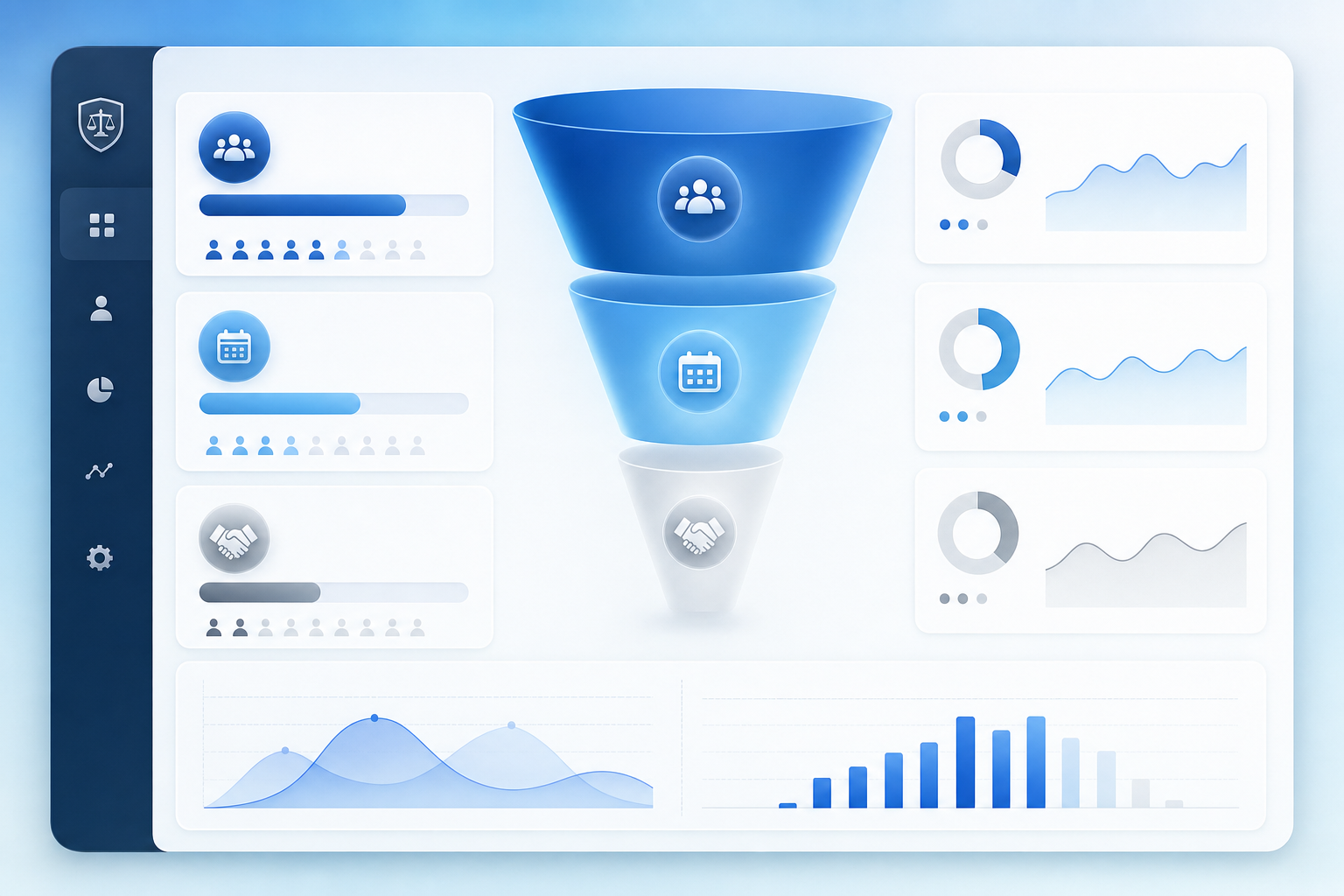
Inquiry to retained client (overall)
10 to 15%
40 to 50%
Funnel stage | Average firm | Top performers |
|---|---|---|
Inquiry to consultation booked | 30 to 45% | 50%+ |
Consultation to retainer signed | 25 to 35% | 40 to 50% |
Sources: law firm lead conversion benchmarks and legal intake performance metrics.
Bankruptcy skews differently from PI or family law. Urgency is higher, so booking-rate decay is steep when response slips past the first hour. And retainer conversion is more payment-sensitive than eligibility-sensitive: most callers qualify legally, but a meaningful share cannot clear the down payment on the spot. Track booking rate, retainer rate, and the gap between them separately. That gap is where payment-plan friction lives.
The Five-Minute Window: How Response Speed Determines Bankruptcy Client Acquisition
Speed to lead is the single biggest lever in bankruptcy intake, and most firms are losing the race by an order of magnitude. According to law firm speed-to-lead research, a prospect contacted within five minutes is 21 times more likely to convert than one contacted after 30 minutes, and the first firm to respond wins roughly 79% of the time.
After-hours volume is where this gets brutal. If half your inquiries land between 6 p.m. and 8 a.m. and your phones open at 9, you've lost the auction on most of them before anyone checks voicemail.
An automated acknowledgment buys a few minutes of trust. It does not retain the client. What converts is a real person calling back inside the window with the prospect's name, chapter signal, and stated urgency already in view. Auto-replies promising a callback "within one business day" confirm the prospect's fear that nobody is picking up tonight.
Multi-Touch Follow-Up Systems That Convert Undecided Bankruptcy Prospects
Most bankruptcy leads do not retain on the first call. Industry data suggests the average lead needs three to seven touches before signing, yet a large share of intake staff stop after one attempt. The retainer goes to whichever firm kept showing up while the prospect was still deciding.
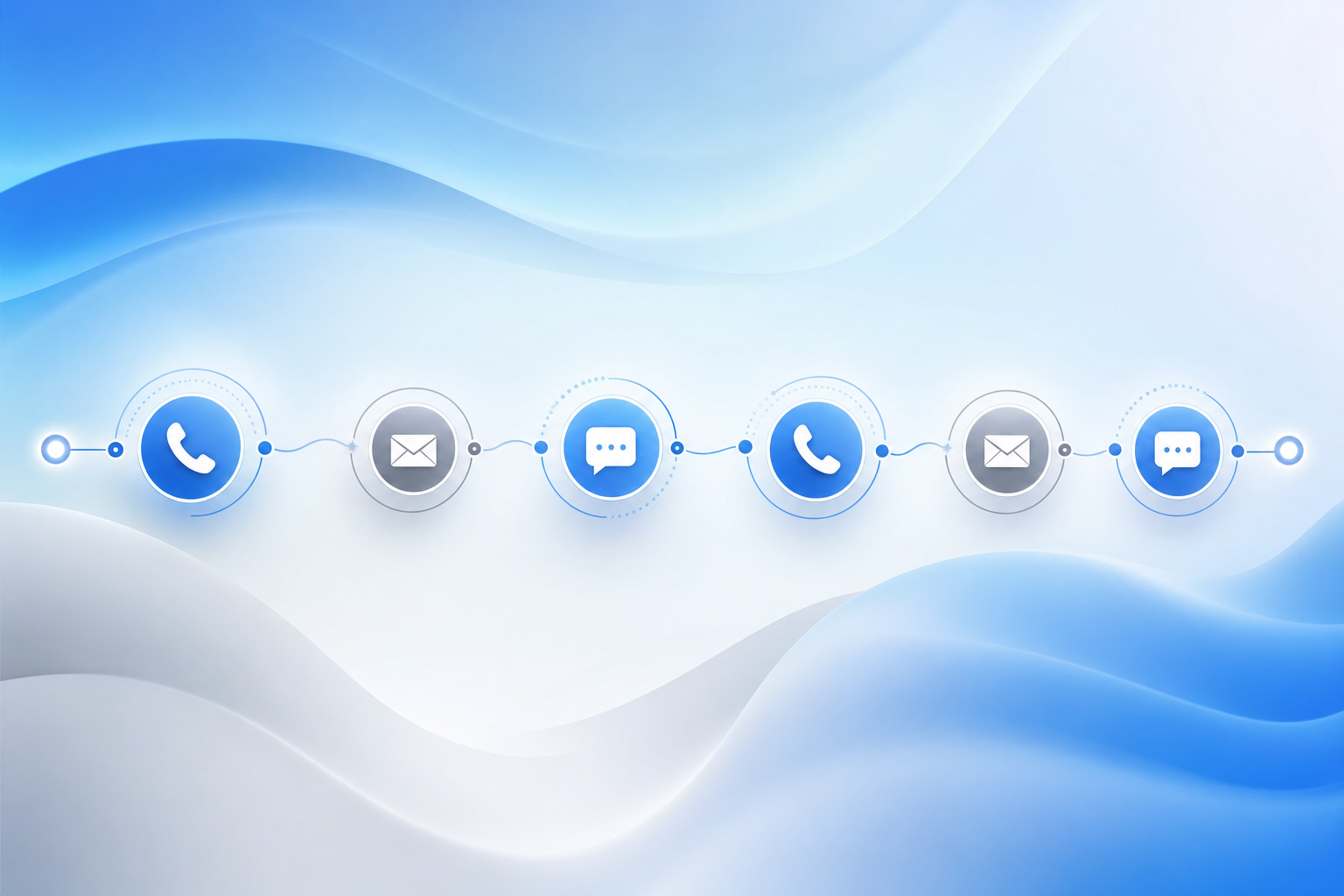
A working cadence looks like this:
- Day 0: live callback inside the speed-to-lead window, plus a confirmation email.
- Day 1: text recap with a link to a short means-test explainer.
- Day 3: email on what Chapter 7 versus 13 changes for their home, car, and wages.
- Day 7: phone call from the assigned paralegal, not a generic queue.
- Day 14: text on filing timelines and garnishment cutoffs.
- Day 30: re-engagement email anchored on state exemption protections.
Each touch should carry a quiet qualification checkpoint: questionnaire completed, paystubs uploaded, payment range confirmed. Leads that stall at the same step twice get rerouted or marked dormant with a quarterly check-in, so follow-up effort goes where it can still close.
Intake Analytics That Reveal Where Bankruptcy Leads Are Falling Through
You cannot fix a funnel you cannot see. Most firms track signed retainers and call it analytics. That tells you the score, not where the game was lost.
Five diagnostics expose the actual leaks:
- Lead source attribution. Break booking and retainer rates out by source (Google Ads, organic, referral, directory). Two sources can produce the same lead volume and a 3x gap in retainer rate.
- Stage-by-stage drop-off. Measure inquiry to contact, contact to consultation booked, booked to held, held to signed. The biggest leak is rarely where intake staff assume.
- Time-to-first-contact in minutes, plotted against retainer rate weekly to see your decay curve.
- No-show rate, split by reminder cadence and booking lead time. Same-week bookings show up; two-week-out bookings ghost.
- Reason-for-loss codes captured at the call, so dormant leads aggregate into a pattern.
Stafi and Attorney Assistant both land on the same point: firms that instrument these five fields close the gap on top performers within a quarter, because the fix becomes obvious once the bottleneck has a number attached.
How Qualification Frameworks Prevent Wasted Consultation Time
A 60-minute consultation with a prospect who never qualifies is an hour your attorney could have spent closing two who did. Qualification belongs before the calendar invite, not during it.
Five gates worth running pre-consultation:
- Debt threshold and composition. Confirm unsecured balances, secured arrears, and whether nondischargeable debt (recent taxes, student loans, support) dominates.
- Income signal. Pull household size and gross monthly income against the state median to flag Chapter 7 vs. 13 fit before the call.
- Asset disclosure. Real estate, vehicles over the exemption, and retirement balances shift the conversation from filing to strategy.
- Jurisdictional fit. State of residence for the 730-day domicile rule and your firm's filing district.
- Conflict check against creditors, co-debtors, and prior matters.
Gate the booking on these, and held consultations skew toward retainable cases.
Payment Plan Barriers That Kill Bankruptcy Retainers at the Finish Line
The cruelest irony in bankruptcy intake: the prospect needs you because they are broke, and your retainer is the last creditor they have to clear. A held consultation ending with "let me think about the down payment" is a payment problem dressed up as a decision problem.
Four levers remove that friction:
- Low-down Chapter 7 via bifurcated retainers. Glade's payment workflows support splitting fees into a small pre-filing portion and a post-filing payment plan so the client signs today and pays the bulk after the automatic stay kicks in.
- Chapter 13 fees rolled into the plan payment. Say so on the call.
- Third-party legal financing as a backup for clients who cannot clear the bifurcated minimum.
- Transparent fee math during the consultation. Walk through filing fees, attorney fees, and credit counseling line by line before asking for a card.
Discuss payment in the first 15 minutes, not the last five. Prospects who hear the number early relax; prospects who hear it at the end feel ambushed and ghost.
Converting Bankruptcy Consultations Into Retained Clients Using Glade AI's Intake Intelligence
Everything above is diagnosis. Glade is where the diagnosis becomes execution, built bankruptcy-first for the exact gaps named.
How the intake intelligence maps to each leak:
- Pre-filled questionnaires arrive populated with tri-merge credit data, eight-year bankruptcy search history, and property records tied to SSN. The prospect confirms instead of recalling.
- Event-triggered workflows fire on real client actions (questionnaire submitted, paystub uploaded, payment received), not paralegal memory. Stalls surface as workflow data.
- Payment gates block progression until a fixed-dollar or percentage milestone clears, with bifurcated pre-filing and post-filing retainers codified into invoice math.
- Behavioral custom statuses act as workflow controls. "Consultation Held - Awaiting Retainer" auto-suppresses follow-ups or triggers quarterly re-engagement on dormant leads.
- Conversion reporting breaks same-day, monthly, and quarterly close rates by paralegal, lead source, and stage, with a 12-month waterfall and AR velocity.
Four of the country's top ten bankruptcy firms by filing volume run their cases on Glade, and implementation completes in days.
Final Thoughts on Fixing Bankruptcy Intake Conversion Rates
Speed, qualification, and payment structure are the three variables that separate firms closing 15% of inquiries from firms closing 45%. You can't optimize what you don't measure, and most intake teams are flying blind between booked and signed. Glade gives you stage-by-stage visibility and pre-filing workflows that remove the friction before prospects ghost. If you want to see your own funnel diagnostics and where tooling closes the gap, book a demo and we'll walk through it together.
FAQ
What's the biggest reason bankruptcy consultations don't convert into retained clients?
Most firms lose leads during the first five minutes after contact. Roughly 42% of inquiries arrive after hours and sit in voicemail until morning, and by then the prospect has already called two other firms, and the first firm to respond wins 79% of the time.
How do I stop wasting consultation time on prospects who can't qualify?
Run five pre-consultation gates: debt threshold and composition, income signal against state median for chapter fit, asset disclosure above exemptions, jurisdictional domicile check, and conflict screening. Block the calendar invite on these so held consultations skew toward retainable cases instead of burning attorney hours on prospects who never qualified.
Can I offer zero-down Chapter 7 retainers without taking on risk?
Yes, through bifurcated retainers that split fees into a small pre-filing portion and a post-filing payment plan. The client signs today with minimal down payment, then pays the bulk after the automatic stay kicks in, removing the payment barrier at the finish line while keeping the fee structure attorney-protected.
What intake analytics actually reveal where bankruptcy leads fall through?
Track five fields: lead source attribution with retainer rate by channel, stage-by-stage drop-off from inquiry through signed retainer, time-to-first-contact in minutes plotted against conversion weekly, no-show rate split by reminder cadence, and reason-for-loss codes captured at the call. The biggest leak is rarely where intake staff assume it is.
What is the difference between same-day close rate and monthly close rate in bankruptcy intake?
Same-day close rate measures retainers signed on the day of initial contact, while monthly close rate tracks all retainers signed within 30 days of inquiry. Top performers hit 40 to 50% monthly close rates compared to the 14% industry average, typically requiring three to seven prospect touches between inquiry and signature.